

Opening a bank account in Japan sounds straightforward until you are standing at the counter with every document you were told to bring, and the bank clerk points to a small printed circle on the form and asks for your hanko. If you do not have one, the appointment ends there. You do not get a partial approval or a workaround. You come back another day, with the stamp.
For foreign graduates setting up their financial life in Japan, the hanko question surfaces earlier and more consequentially than most people expect. Hanko for new graduates in Japan is not just an employment formality — it is a banking requirement that can delay your salary setup, your utility payments, and your ability to function financially in the country. Getting it sorted before you need it is not overcautious. It is practical.
This guide focuses specifically on the bank account setup process for foreign graduates in Japan. It covers why banks ask for a seal, which accounts and documents typically require one, what type of hanko is appropriate, and how to order one in English before the first deadline catches you unprepared.
By the end, you will have a clear picture of what to order, when to order it, and what to avoid.
Why This Segment Is Asked for a Seal

Japanese banks have long used the personal seal as a primary method of identity verification on financial documents. The logic is consistency: a stamp produces the same impression every time, creating a reliable visual record that can be compared across multiple documents over years of account activity. Where a signature might shift or be questioned, a registered seal impression is treated as definitive.
For new graduates, the bank account question is particularly urgent because salary payment in Japan is almost universally processed through bank transfer. Your employer needs your account details before your first pay cycle closes. If your account is not open, your salary has nowhere to go. Some companies will hold payment until the account is confirmed. Others process it to a default account and require manual correction later, which creates its own administrative headache.
Here is a realistic scenario: you start work on April 1st, which is the standard new graduate intake date for many Japanese companies. HR gives you a two-week window to submit your bank account details. You go to the bank on day three, documents in hand. The clerk reviews your residence card, your employee ID, and your application form — then asks for your hanko. You do not have one. The clerk explains that you can come back when you have it. You now have less than two weeks, a full work schedule, and a hanko to source.
Another situation that comes up often involves the specific bank your employer uses. Some Japanese companies have a preferred bank or a designated payroll account at a particular institution, and they will encourage or require new employees to open an account there. Larger banks like Japan Post Bank, Mizuho, MUFG, and Sumitomo Mitsui each have their own procedures, but nearly all of them include a seal field on their standard account opening forms. Assuming your employer’s preferred bank will be the exception is a risk not worth taking.
The seal is not just bureaucratic tradition in this context. Banks use your registered stamp impression as an ongoing verification tool. When you later request large transfers, update account details, or handle certain financial transactions in person, the bank may compare the impression you make at that moment against the one on file from when you opened the account. The stamp is your long-term financial signature in Japan.
Common Documents and Timelines
Knowing which banking documents require a hanko, and when they tend to appear in a new graduate’s timeline, helps you plan around the process rather than react to it.
Documents that commonly require a hanko for bank account setup:
- Standard bank account application form
- Direct debit authorization forms (furikomi setup for salary)
- Bank-specific customer agreement documents
- Utility payment setup through automatic bank deduction
- Loan or credit card applications linked to the account (if applicable in the first year)
- Employer payroll registration forms that include bank account confirmation
Approximate timeline:
For most new graduates on the standard April intake, the bank account pressure begins in the first two weeks of employment. HR typically issues payroll setup instructions during onboarding week. Bank appointments, depending on branch availability, often need to be booked in advance or require waiting time on the day.
Apartment lease setup, which commonly happens one to three weeks before the start date, may also involve a bank reference or automatic payment authorization that requires a seal. Utility contracts — electricity, gas, water — often use bank direct debit forms that include a hanko field.
This means the hanko need for banking purposes can begin before you even officially start work, if you are setting up an apartment and utilities in advance. The safest approach is to have your hanko ready before you begin apartment hunting, or at the very latest, before you sit down for your first bank appointment.
If you are still looking for the right role, ComfysCareer is a solid starting point for foreigner-friendly jobs in Japan.
Recommended Hanko Type and Size
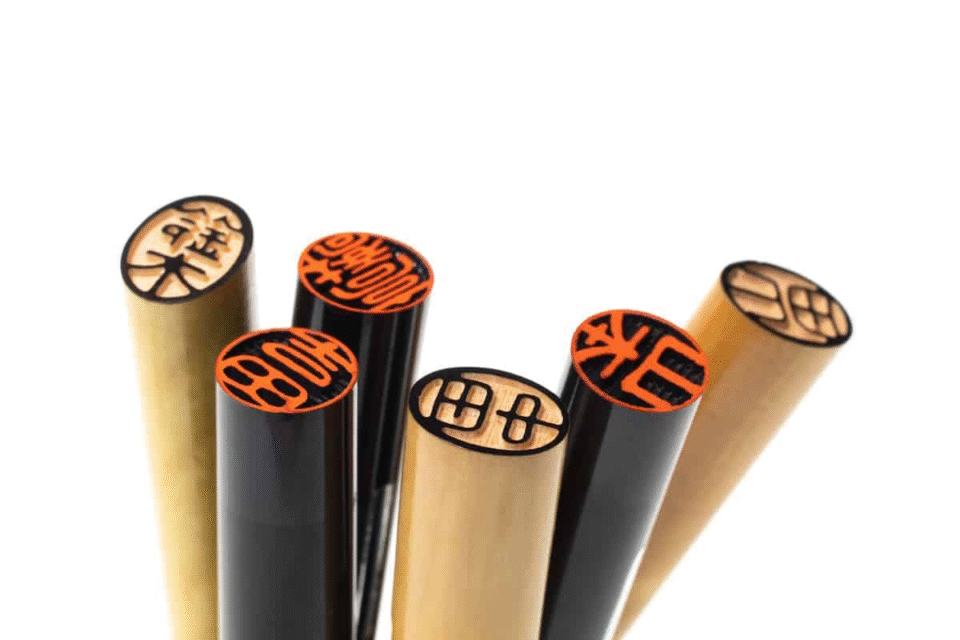
For banking purposes specifically, the type and registration status of your hanko matters more than it does for general paperwork. Here is how to think through your options.
The bank seal (ginko-in):
Many graduates choose to designate one stamp specifically as their bank seal. This stamp is registered with your bank at account opening and used exclusively for financial documents associated with that account. It does not need to be officially registered with the government, but it is registered with your bank — meaning the impression on file must match the impression you produce for any future in-person banking transactions. Keeping this stamp separate from your everyday personal hanko helps prevent wear, damage, or accidental use on other documents.
The standard personal hanko (mitomein):
Some banks, particularly regional banks and Japan Post Bank, accept a standard personal hanko for account opening without requiring a separate registered bank seal. This varies by institution, and policy can differ even between branches of the same bank. Before your appointment, it is worth calling ahead or checking the bank’s English-language guidance to confirm what they accept.
What about a jitsuin?
A jitsuin is a seal officially registered with your local city or ward office. For standard bank account opening, a jitsuin is not typically required. It becomes relevant for larger financial transactions — certain loan agreements, significant asset transfers — but day-to-day account setup and payroll registration do not usually reach that threshold. Most new graduates can proceed with an unregistered personal or bank seal for their initial setup.
Checklist before you order:
- Confirm whether your intended bank requires a dedicated bank seal or accepts a standard personal hanko
- Ensure the name on your hanko matches your residence card exactly
- Choose your size (10.5mm is the standard for personal bank seals; some prefer 12mm)
- Decide on script: katakana renders more traditionally on Japanese bank forms, but Roman letters are accepted at most institutions
- Order with enough lead time before your first bank appointment — at least one week, ideally two
- Consider ordering a second stamp if you want to keep a dedicated bank seal separate from your everyday hanko
Size and material:
The 10.5mm diameter is the most common size for personal bank seals in Japan. It fits cleanly within the seal fields on standard banking forms without overflowing. Material choice — acrylic, resin, wood, or buffalo horn — affects durability and appearance but not function. For a stamp you plan to use consistently over years of banking, a harder, more durable material is a reasonable investment.
Ordering Tips in English
Ordering a hanko in English is straightforward when you use a service built for non-Japanese speakers. The key is ordering accurately and early.
What to confirm before placing your order:
Make sure the service supports non-Japanese name carving. Foreign names in Roman letters or katakana require a provider familiar with the specific challenges of non-Japanese script — spacing, character balance, legibility at small stamp sizes. A service like HankoHub is designed specifically for this, offering English-language ordering and customization for foreign names as a standard offering.
Check production and delivery timelines before you confirm your order. Standard production typically takes a few business days. Factor in delivery time based on your location in Japan, and add a buffer before your bank appointment. Arriving at the bank with a stamp that just arrived that morning is fine — arriving without one because the order was delayed is not.
Common mistakes when ordering:
Using a casual or partial version of your name is the most common error. Your hanko must match your official name on your residence card. If your legal name is Jonathan David Park, ordering a stamp that reads “Jon Park” creates a document discrepancy that banks notice. The name on the stamp and the name on your identification need to be consistent.
Ordering too close to your bank appointment is the second most frequent mistake. New graduates often underestimate how quickly the onboarding period fills up, and the hanko order gets pushed until the last moment. A week’s lead time is the minimum. Two weeks gives you room if there are any production or delivery delays.
Ordering the wrong size for banking purposes is less common but worth flagging. Some graduates order a larger decorative stamp for general use and assume it will work for banking as well. Standard bank form seal fields are sized for the 10.5mm to 12mm range. A stamp significantly outside that range may not fit the designated field cleanly, which can cause processing complications at the counter.
FAQ
Do all Japanese banks require a hanko to open an account?
Most traditional Japanese banks include a seal field on their standard account opening forms and expect it to be completed. Some banks have updated their procedures and accept signatures, particularly for certain account types or in branches serving international customers. The safest assumption is that your bank will ask for a hanko, and confirming in advance is better than arriving without one.
Can I use the same hanko for my bank account and other documents?
Yes, though many people choose to keep a separate stamp dedicated to banking to prevent wear and reduce the risk of accidental misuse. If you use a single stamp for everything, store it carefully, as the impression needs to remain consistent with the one registered at your bank.
What happens if my hanko impression does not match the one on file at the bank?
The bank will typically not process the transaction until the correct stamp is presented. If your stamp has worn down significantly or been replaced, you may need to go through an account update process to register the new impression. This is why protecting your bank seal from excessive wear or damage matters.
Does my hanko need to be registered with the government for banking?
For standard account opening and payroll setup, no. An unregistered personal or bank seal is commonly accepted. Official government registration as a jitsuin is typically required only for higher-value financial transactions, not day-to-day account management.
What name should appear on my bank hanko?
The name should match your residence card exactly. Banks cross-reference identification documents when opening accounts, and a mismatch between the name on your stamp and the name on your ID can halt the process.
Can I order a hanko with my name in English letters for banking?
Yes. Services including HankoHub offer Roman alphabet carving for foreign names. Katakana is the more traditional format on Japanese bank forms, but English letters are accepted at the majority of institutions. If you are uncertain about your specific bank’s preference, katakana is the more conservative choice.
What if I need to open accounts at multiple banks?
The same hanko can be registered at multiple banks. Each bank will keep its own impression on file. As long as your stamp remains consistent and undamaged, there is no issue using it across different institutions.
Next Steps

Bank account setup is one of the first things that needs to happen when you begin working life in Japan, and a missing hanko is one of the most avoidable reasons for it to stall. Getting your stamp sorted before your first bank appointment removes a genuine obstacle from an already busy transition period. Order a practical personal hanko at HankoHub and arrive at your bank appointment ready to complete the process in one visit.